Tesla

They are only addressing range and efficiency. What about heating the cabin during the annual Wisconsin ice age? EVs are just not practical here. On the other hand I would like an electric bike for the summer.
I've had a winter with the Model Y and central New York weather similar to Wisconsin (2 years in a row of over 10 feet of snow). Before leaving you can turn on the climate control with the app on the phone. Even the coldest days its at the temperature you set it to in 10-15 minutes. As comfortable as any car I've ever owned.
 
That great WI company Kwik Trip has started adding high speed chargers to their stations recently, so hopefully they will become a lot more commonplace in the near future. https://www.kwiktrip.com/wordpress/wp-content/uploads/2026/04/Binder2.pdf
There are quite a few apps in addition to the ones that the EV manufacturers provide for their owners, that map out chargers along pretty much any route of travel you may want to take. Granted, there are some areas that have far fewer than others, but with some relatively easy planning you're very unlikely to be left stranded anywhere.
Kwik Trips are everywhere here although I doubt many will get chargers this far out of the big cities. Here EVs are ridiculous to own. At least cars and trucks. I wish they made more electric side by sides because few people take them more than five miles from home and seldom ride more than 20 miles in a day. They would be perfect for anyone that owns 40 acres.

I have a friend that has a Mach-E Mustang in Los Angeles. There it’s very practical. But this isn’t California.
 
I've had a winter with the Model Y and central New York weather similar to Wisconsin (2 years in a row of over 10 feet of snow). Before leaving you can turn on the climate control with the app on the phone. Even the coldest days its at the temperature you set it to in 10-15 minutes. As comfortable as any car I've ever owned.
How far can you drive when it’s -30F? I mean factoring in heating?
 
How far can you drive when it’s -30F? I mean factoring in heating?
Definitely lose range, not as much as towing I would guess. It doesn't get that cold here, maybe -15 but that isn't all the time. Not like you have in Wisconsin. The gas cars I've had definitely lost mileage in the winter because of the gas blend and time idling if you had a car starter. But battery loss is more for sure.

A couple of YouTube channels if people are interested - Frozen Tesla is a guy from Saskatchewan who has done a lot of tests in Winter with real numbers for his work commute. Very helpful to me to see real numbers before buying. And another channel is WisconsEV is a guy (I think he lives in Madison) who is documenting when new charging stations pop up in your state. He goes to them and "rates" them for amenities etc.
 
Definitely lose range, not as much as towing I would guess. It doesn't get that cold here, maybe -15 but that isn't all the time. Not like you have in Wisconsin. The gas cars I've had definitely lost mileage in the winter because of the gas blend and time idling if you had a car starter. But battery loss is more for sure.

A couple of YouTube channels if people are interested - Frozen Tesla is a guy from Saskatchewan who has done a lot of tests in Winter with real numbers for his work commute. Very helpful to me to see real numbers before buying. And another channel is WisconsEV is a guy (I think he lives in Madison) who is documenting when new charging stations pop up in your state. He goes to them and "rates" them for amenities etc.
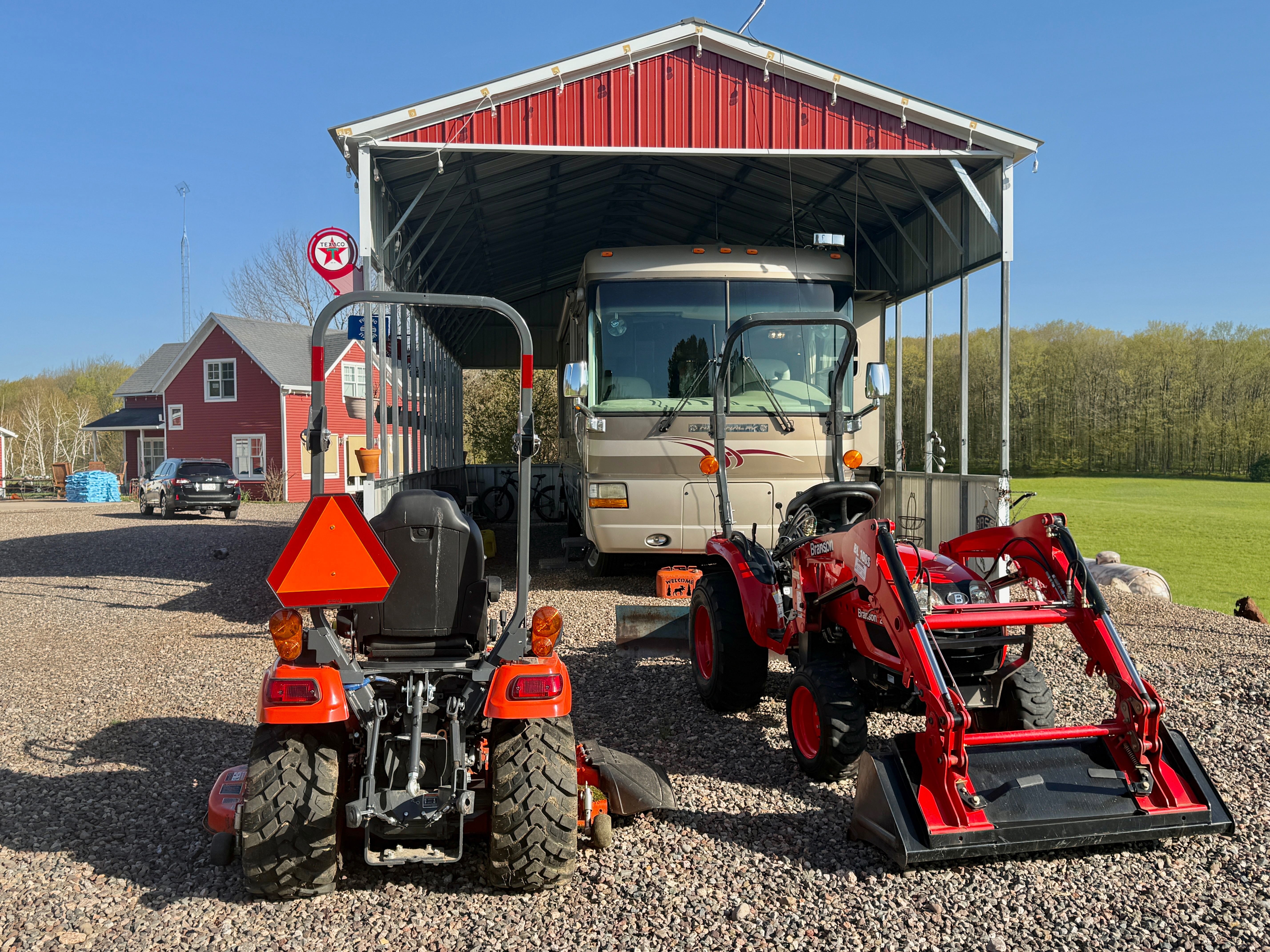
Thanks. I can see someone in Madison owning an EV successfully. However in this rural area they just are not practical. I still think an off-road EV with solar charging would be great here. Even an electric tractor. Bothe these tractors are diesel and could easily be electric and still be practical. Which reminds me I have to make a diesel run to town.

 
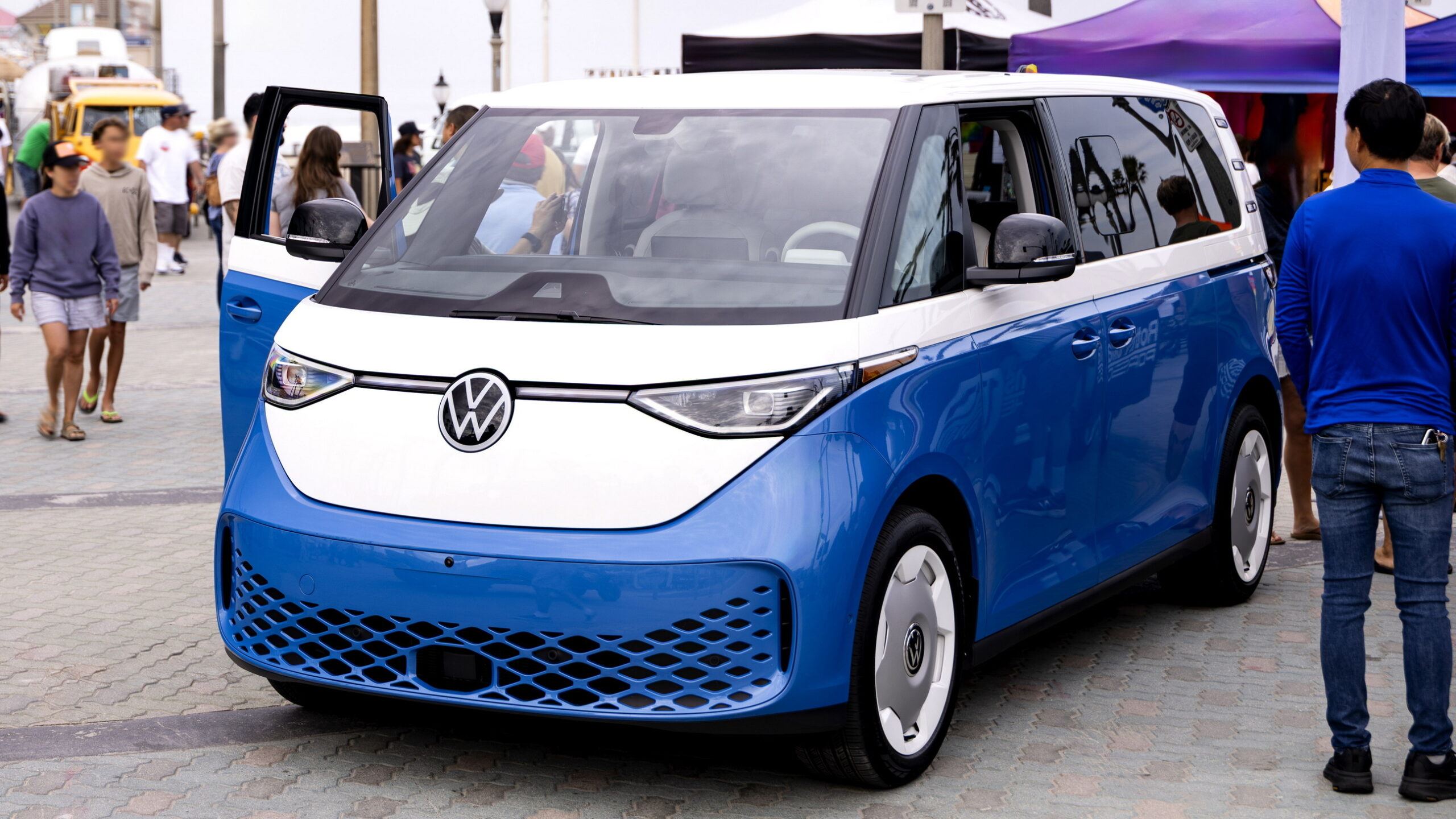
I had looked at the VW EVs ( as well as pretty much every other EV sold in the US), and while a VW fan in general, I was disappointed in the range offerings of their EVs, so not too surprised with your experience. Range was probably the main thing I looked at when researching EVs.
As EV's go, the Silverado is one of the least efficient in miles/kWh, but overcomes that with its large size battery to get one of the best range offerings/$ even when towing, if you believe the YouTubers experiences . As mentioned earlier, I felt the range loss with age would still leave it in pretty good shape as we wind down our needs for range.
Frankly, I think BYD from China is so far ahead of the US manufacturers in terms of battery & charger technology, performance, comfort, and cost, that if the tariffs are ever removed the US car companies are going to be in really big trouble.
Yeah, I was a fan of VW until they announced they were making everything EV.
This is another example how delusional they were:
 
There is one about 20 miles away. During high electrical demand they have to fire up diesel generators. So is that Tesla really zero emissions?
What I've read, is that due to comparable various manufacturing pollution with both IC's and EV's, the EV's are not really green compared to an IC vehicle until they reach about 50K miles. After that is when they have accounted for their manufacturing pollution by reduced operating pollution, and start passing up the IC vehicles with their fuel burning emissions.
If they last their estimated 200K miles, they've also recouped the pollution for their replacement already,+100K of relatively pollution free driving. Relatively, because there is obviously pollution produced in generating electricity, but the theory is that the point source pollution of a power plant is easier to contain/control than the what is given off from millions of IC engines dispersed throughout the country/world.
Yeah, I was a fan of VW until they announced they were making everything EV.
This is another example how delusional they were:
Like GM, and probably others to a lesser level, VW decided that with the Fed rebates they could charge way more than the vehicle was worth. To make the VW BuzzID case even worse, was the low range it has, which along with the high price, was something the "cute factor" just couldn't overcome.
The Fed should just stay out of it, and let the vehicles sell themselves on their own merits. Whenever the Fed offers rebates on some energy saving technology, there always seems to be an equal or greater price increase by the manufacturers. Case in point was our geothermal heat pump. When I had the original one installed there were no rebates, when it needed to be replaced 10 years later, now with the Fed rebates offered, it cost me twice what the original one did.
 
Last edited:
What I've read, is that due to comparable various manufacturing pollution with both IC's and EV's, the EV's are not really green compared to an IC vehicle until they reach about 50K miles. After that is when they have accounted for their manufacturing pollution by reduced operating pollution, and start passing up the IC vehicles with their fuel burning emissions.
If they last their estimated 200K miles, they've also recouped the pollution for their replacement already,+100K of relatively pollution free driving. Relatively, because there is obviously pollution produced in generating electricity, but the theory is that the point source pollution of a power plant is easier to contain/control than the what is given off from millions of IC engines dispersed throughout the country/world.

Like GM, and probably others to a lesser level, VW decided that with the Fed rebates they could charge way more than the vehicle was worth. To make the VW BuzzID case even worse, was the low range it has, which along with the high price, was something the "cute factor" just couldn't overcome.
The Fed should just stay out of it, and let the vehicles sell themselves on their own merits. Whenever the Fed offers rebates on some energy saving technology, there always seems to be an equal or greater price increase by the manufacturers. Case in point was our geothermal heat pump. When I had the original one installed there were no rebates, when it needed to be replaced 10 years later, now with the Fed rebates offered, it cost me twice what the original one did.
According to “Car Edge” on YouTube; the VW ID4 is the slowest selling car in America.
 
Thanks. I can see someone in Madison owning an EV successfully. However in this rural area they just are not practical. I still think an off-road EV with solar charging would be great here. Even an electric tractor. Bothe these tractors are diesel and could easily be electric and still be practical. Which reminds me I have to make a diesel run to town.

You underestimate how big these batteries are and how impractical it is to charge them with the size of solar panels that could plausibly be mounted to them. It'd take days to charge a car with solar off grid at which point why bother.

Re: all the folks talking about fast charging...I hit up a fast charger maybe twice a year. EVs make the most sense when you charge at home. Even if you live rural, if you're going less than 100 miles in a day, you just fill up every night.
 
You underestimate how big these batteries are and how impractical it is to charge them with the size of solar panels that could plausibly be mounted to them. It'd take days to charge a car with solar off grid at which point why bother.

Re: all the folks talking about fast charging...I hit up a fast charger maybe twice a year. EVs make the most sense when you charge at home. Even if you live rural, if you're going less than 100 miles in a day, you just fill up every night.
Thanks. I wasn’t talking about mounting solar panels on the vehicle. I was talking about at home. I wouldn’t mind going off grid with electricity. I would do a wind/solar combo.
 
Thanks. I wasn’t talking about mounting solar panels on the vehicle. I was talking about at home. I wouldn’t mind going off grid with electricity. I would do a wind/solar combo.
Solar + batteries are the way. But tbh if your grid is reliable, it's not really cost effective to have a big battery. I thought about adding batteries to my solar setup and it made zero sense since we lose power about once every five years.
 
Solar + batteries are the way. But tbh if your grid is reliable, it's not really cost effective to have a big battery. I thought about adding batteries to my solar setup and it made zero sense since we lose power about once every five years.
The grid here is very reliable. The problem is if I ever did loose the power for a few days it would cost me five digits of dollars in the winter. Of course most people here would be in the same boat. My problem is I don’t have a heat source that doesn’t depend on electricity.
 
The grid here is very reliable. The problem is if I ever did loose the power for a few days it would cost me five digits of dollars in the winter. Of course most people here would be in the same boat. My problem is I don’t have a heat source that doesn’t depend on electricity.
For this use case, I'd just buy a whole house generator. You'll use it like once every 10 years
 
The grid here is very reliable. The problem is if I ever did loose the power for a few days it would cost me five digits of dollars in the winter. Of course most people here would be in the same boat. My problem is I don’t have a heat source that doesn’t depend on electricity.
With the amount of propane you have on hand, a propane powered generator would seem like the simplest solution....no stale gas or diesel to worry about between the rare outages, but with the amount of open space you have a ground mounted solar array with a battery (or EV) back up would certainly be a feasible option too, or even an array mounted on the roof of your class A's shelter might be an option.
 
For this use case, I'd just buy a whole house generator. You'll use it like once every 10 years

That would be the smart thing to do.

With the amount of propane you have on hand, a propane powered generator would seem like the simplest solution....no stale gas or diesel to worry about between the rare outages, but with the amount of open space you have a ground mounted solar array with a battery (or EV) back up would certainly be a feasible option too, or even an array mounted on the roof of your class A's shelter might be an option.

I do have the perfect property for solar AND windmills. Another thing I could do is add a propane fireplace/stove that doesn’t require electricity. It’s something I could enjoy six months out of the year.
 
Back
Top