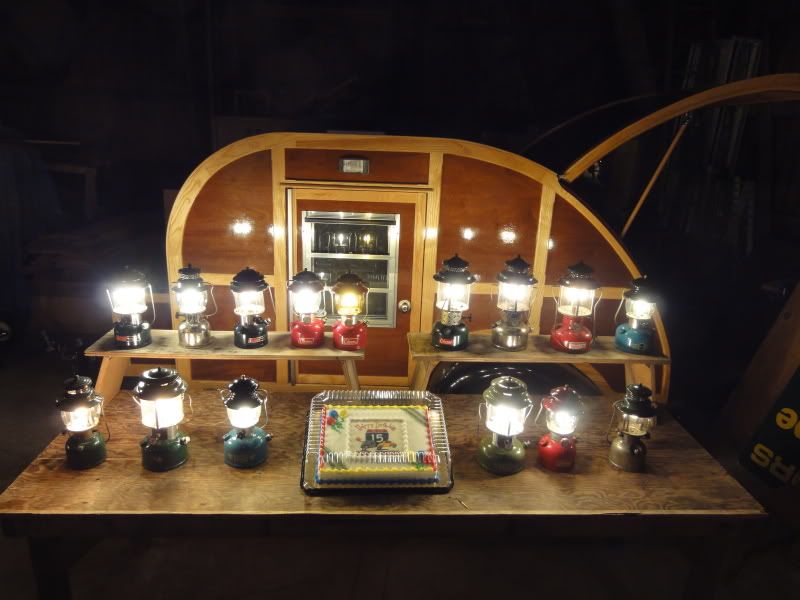
Although I have used "white gas" appliances for years, I never really put much (enough?) thought into the fuel itself until I got this lantern.
My question is related to old white fuel and how long is the fuel good? These lanterns came with fuel in the founts. Obviously the old fuel needs to be removed and replaced.
Can the old fuel be strained and used again?
How long can the fuel be stored?
Jean's question is valid and there a ton of different of different responses out there on the web, in addition to what has been offered above. Perhaps more experienced Coleman types could chime in if they see anything controversial here about what I have been able to glean:
Coleman fuel is essentially gasoline that has been super-refined to leave few deposits in the appliance. It has a low octane rating, some age-related stabilizers (meaning it goes "stale" slower than auto gasoline) and few or none of gasoline's additives.
Coleman states that its fuel unopened in the original container is good for 7 years (some others will say much longer, but who does that anyway?) and within 2 years if "opened". This is where things get tricky.
When Coleman fuel goes "bad" it is as a result of some of the chemicals, of which there are many, mixing and reacting with the surrounding oxygen and water vapour. This can alter the nature of the fuel itself, or simply change the way it burns. When bad fuel sits or burns it can leave varnish deposits on everything it touches. If it leaves them in small spaces like the lantern generator's narrow tubes, this can be either annoying, requiring a clean-out, or be fatal to the part and require replacement.
If you
know your fuel is bad, or don't want to risk burning it in a small appliance, and want to be rid of it, you can add
small amounts to your car's tank, providing the tank is already
full of gas with a decent octane rating. Doing otherwise, on an empty'ish tank will result in pinging. It goes without saying that whatever you put in your tank shouldn't contain sediment and rust flakes from the lantern's tank, which it could, and probably shouldn't (for the lantern's sake).
Alternatively, it can be used carefully and sparingly as a solvent. Or taken to your local hazmat site. The fuel similarities are great as some lanterns are designed to burn both white gas and gasoline.
Despite the Coleman 2-year limit, a good rule of thumb is to
not use fuel that has been sitting in the lantern for more than a camping season. All that air pumping, pressurizing and depressurizing has accelerated the decline of the fuel with introduced oxygen and moisture much faster than if it were just sitting in the original container. So that 2-year rule is out for fuel that you have already put into the lantern. And don't pour unused lantern fuel back into a "good " fuel container. Consider it toast if you are not going to use it again this camping season. Putting
fresh fuel back in solely for off-season storage purposes (because it does have some anti-corrosion properties) is also recommended by many Coleman aficionados.
How to prolong the useful life of that big 1 gallon can of fuel so you're not always spending $$ and pouring it into your car, or otherwise?
I haven't been able to absolutely confirm all of these these steps, but you could...
2) decant an open original container of fuel that has a modest amount of air in it, into smaller single-trip-sized containers,
filling them to the top and discarding the original container. Make sure they have a good seal and are meant for fuel storage. And label date them. Transferring the fuel is likely what you would do anyway as taking that big gallon jug along with you every time isn't terribly practical.
2) store your all your fuel, lanterns and stove tanks in a
temperature-stable environment. Wide swings in temp can cause the containers to "breathe", especially if they are not completely full, and possibly introduce even more air and moisture past any o-rings or seals.
The decanting process itself likely introduces air into the fuel, not unlike swirling your glass of red wine, so do it slowly if you are going to do this at all.
Taking some of these steps will probably let you squeeze more years out of your fuel supply, or require fewer trips to the hazmat center. And it could result in fewer fuel quality related issues with your lantern or stove. But it probably won't gain you back the original 7 year shelf life.
Hope that helps someone who uses (or is thinking of using) these contraptions.
There's a ton of other maintenance and repair stuff to understand and perform in relation to these lanterns, that many (including myself) will enthusiastically decline to undertake. But I would think that an effective and manageable fuel maintenance protocol is easily within the purview of everyone who wishes to use, and continue to use, these things.