Trash question

Boondocking in bear country, what container do you put trash in, and where do you keep the container overnight? I am thinking the most airtight container possible and store overnight in the back of the SUV is the best we can do, but would like to know if anyone has better ideas?
 
I have used the galley to lock trash. I have also used a locked yeti cooler. Some national parks specify locking the food, coolers, water bottles in the car, note that the car needs to-be locked, including the sun roof.
 
We locked the trash in the galley at night, or in the car. The best habit is actually to use smaller bags and plan to visit the trash dumpster/collection point every night on the way to bed or every day on the way out of the campground when heading off for activities. We usually just ran the trash to the dumpster as a part of the final bathroom visit.

From my understanding, the amount of airtight lengths we go to doesn’t do that much to help because bears can smell peanut butter through a factory sealed jar. Food storage isn’t about keeping a bear from smelling your campsite - because your galley is already a food smell hotspot unless you’ve never used it. Rather, good food storage is more about not presenting a convenient snack to a bear. They can tear into an Airstream or into a locked car, but generally only get to that behavior after they’ve already learned what good snackies are in those Yeti coolers. So, keep the coolers and trash locked away out of sight and hopefully the bears don’t learn to punch out windows to get to trash bags. This keeps your windows intact and the bears alive, because once a bear resorts to that behavior it won’t be long before he is “controlled.”
 
Another thing I was told by a ranger in Yosemite years ago was to always cover your coolers in the car (including empty ones) with a towel or blanket or anything that blocks the view to the cooler. Once bears learn that coolers are a food bonanza, an empty one is just as tempting as a full one. Don't give them any visual aids. They will rip open a car for an empty cooler they see just as quickly as for one with food in it.
 
Last edited:
Another thing I was told by a ranger in Yosemite years ago was to always cover your coolers in the car (including empty ones) with a towel or blanket or anything that blocks the view to the cooler. Once bears learn that coolers are a food bonanza, an empty one is just as tempting as a full one. Don't give them any visual aids. They will rip open a car for an empty cooler they see just as quickly as for one with food in it.
Great, now I'm going to be hearing "Hey boo boo...." the rest of today
 
Thank you for your responses. Your suggestions are helpful and are in line with what we have learned in the past, although I had not heard that bears recognize coolers, good to know. We live near Ridgway, Co at 8,000 feet and take precautions even at home. One of our favorite boondocking places is in Hinsdale county Colorado, and Hinsdale county is one place they relocate problem bears because the county population is really low. We used to own a different brand teardrop and I think we were lucky when we camped there, and I want to take better precautions with our CI when we get it.
If anyone is heading to this area we would be happy to make suggestions for the Ridgway, Ouray, Silverton or Telluride areas. Would also enjoy meeting you if you have time.
Thanks again!
 
My bear story and thought on smell management...

Wyoming national forest service campground.
Dinner of bushes beans and Hotdogs. Trash bag left in sink of galley.
Night time yogi bear smells my trash and standing by the side tire on the sink side leans over and reaches over to the bottom of the hatch and (later), you can see the claw drags from the bottom to the top of the galley.
The trailer rocks a bunch but I'm asleep and I think it's an earthquake.
The next day I realize it was a bear and dumb me, why didn't I take my trash to the bear proof dumpster? Learning moment!

I think about this experience and other forests where bears have been present but not aggressive. I think about packing food that is less smellable. Does that exist? Is it right or wrong of me to be in their habitat creating this problem for them? I dont know.
I agree with all the food management ways that have been presented. There are bad ways to manage the picnic basket and really, really good ways.
We have and will continue to push into their habitats.

Also, a note on my experience with the campinn teardrop build vs other trailers I've seen. the smooth metal surface of the CI trailer gives you a layer of protection from a very strong animal that might try to break it apart. It's good!
 
@Jenn thats a great story!

I do daily trash into the cheapo shoppping bags, tied up and then put into heavy contractor bags, also tied up and then hung up somewhere off the ground in a tree or tall bush separate from CI.

I drop those entire contractor bags once a week into campground trash or truck stop trash or BLM dumpsters.

Keeps the rats and trash pandas and the song dogs away from the camp.
 
Bear behavior tends to be a function of their environment. They are fast learners. Once they learn a food source they remember it and will seek it out again in the future. So it really does depend on where you are as to what to expect from any particular bear. Bears that live in national parks are much more habituated to humans and will behave somewhat different from those encountered in the wild where humans aren't such a common occurrence to the bears. The national park bears are the ones who will more quickly spot a cooler in a car and want it.

It's also worth noting the difference between black and grizzly bears. Both kinds can come in similar colors. Don't assume a black bear is only black. Black bears as a rule are more docile than grizzlies but both can and will attack if provoked, scared, or protecting their cubs. It's always good to know what kind of bears you may encounter where you camp and to read up on what to do as well as what not to do.

Bear spray is always a must in bear territory. However, be aware that in some national parks (Yosemite for one) bear spray is not allowed and you can be fined/ticketed for having it. (For the record, more people have been killed by mule deer in Yosemite than bears. No human has ever been killed by a bear in Yosemite.)

Bears are amazing creatures and very cool to see in the wild, but it's important to respect their boundaries. Both for their sake and ours.
 
Bear behavior tends to be a function of their environment. They are fast learners. Once they learn a food source they remember it and will seek it out again in the future. So it really does depend on where you are as to what to expect from any particular bear. Bears that live in national parks are much more habituated to humans and will behave somewhat different from those encountered in the wild where humans aren't such a common occurrence to the bears. The national park bears are the ones who will more quickly spot a cooler in a car and want it.

It's also worth noting the difference between black and grizzly bears. Both kinds can come in similar colors. Don't assume a black bear is only black. Black bears as a rule are more docile than grizzlies but both can and will attack if provoked, scared, or protecting their cubs. It's always good to know what kind of bears you may encounter where you camp and to read up on what to do as well as what not to do.

Bear spray is always a must in bear territory. However, be aware that in some national parks (Yosemite for one) bear spray is not allowed and you can be fined/ticketed for having it. (For the record, more people have been killed by mule deer in Yosemite than bears. No human has ever been killed by a bear in Yosemite.)

Bears are amazing creatures and very cool to see in the wild, but it's important to respect their boundaries. Both for their sake and ours.
Very helpful!
Thank you!
 
Thanks @JohnC really appreciate your insight and pictures.
Do you have any recommends for one or two good books on bears?

I read a great book on bears I found in the tourist stop campground just before the east park entrance by Cody. It was written by a forest service (i think) bear biologist who had been studying bears there for 35 yrs. I wish I could remember the name...i tried a search by Grok and it brought up the Craigshead bro's...
I dont think it was theirs, but the book cited their research I would guess.

Endlessly fascinating...
just amazing creatures, apex predators.

One fact cited stuck with me- how powerful one evolutionary advantage of the brown-grizzly bears was their memory for food sources and when- how they migrate from the meadows to an area where moth grubs are huge protein sources at a certain time, etc.
And lately (this was ten years ago published a few years prior iirc)
- a drift to the east end of park as hunting season just outside provides gut piles, wounded elk, etc.

My brother did a few elk hunts there and he described how imposing it was to have a grizzly moving up a ridgeline towards your spot...the pro elk guides treated the bears with great respect and caution.

It might be good for anyone camping in bear country to seek out local hunters and pro guides and ask what they do in camp.

I was back packing in Idaho, Queens RiverLoop, and we met up with two elk hunters. They had taken their elk and were packing it out. They spared us about 30 seconds for a conversation because they had to be in their truck by dark. They were fearful of bears following them. We thanked them and continued on the trail from whence they came, but somewhat more alert.
 
Thanks @JohnC really appreciate your insight and pictures.
Do you have any recommends for one or two good books on bears?

I read a great book on bears I found in the tourist stop campground just before the east park entrance by Cody. It was written by a forest service (i think) bear biologist who had been studying bears there for 35 yrs. I wish I could remember the name...i tried a search by Grok and it brought up the Craigshead bro's...
I dont think it was theirs, but the book cited their research I would guess.

Endlessly fascinating...
just amazing creatures, apex predators.

One fact cited stuck with me- how powerful one evolutionary advantage of the brown-grizzly bears was their memory for food sources and when- how they migrate from the meadows to an area where moth grubs are huge protein sources at a certain time, etc.
And lately (this was ten years ago published a few years prior iirc)
- a drift to the east end of park as hunting season just outside provides gut piles, wounded elk, etc.

My brother did a few elk hunts there and he described how imposing it was to have a grizzly moving up a ridgeline towards your spot...the pro elk guides treated the bears with great respect and caution.

It might be good for anyone camping in bear country to seek out local hunters and pro guides and ask what they do in camp.
If you just want to read about bears from the standpoint of camping safely there's no need to buy anything. Google searches will provide all kinds of free information regarding behavior, how to identify, what to do or not do if you find yourself in a bad situation, etc.

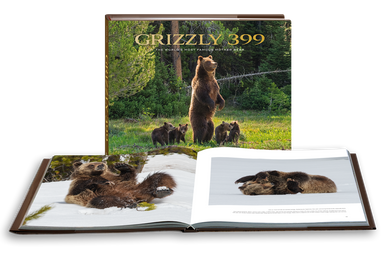
If you want a nice picture book with some related text, Tom Mangelsen's book documenting grizzly bear 399 has some wonderful photos and text. (You might find it cheaper online.) Tom is a world famous wildlife photographer who has lived in Grand Teton for over 30 years.


For the record Yellowstone and Grand Teton require you to stay at least 100 yards from bears and wolves and 25 yards from any other wildlife. That's good advice even outside any park. Although, I believe 25 yards is way too close for larger animals like moose, elk, bison or some others. Those animals can all run extremely fast and if you anger one at 25 yards you could be in big trouble.
 
Back
Top